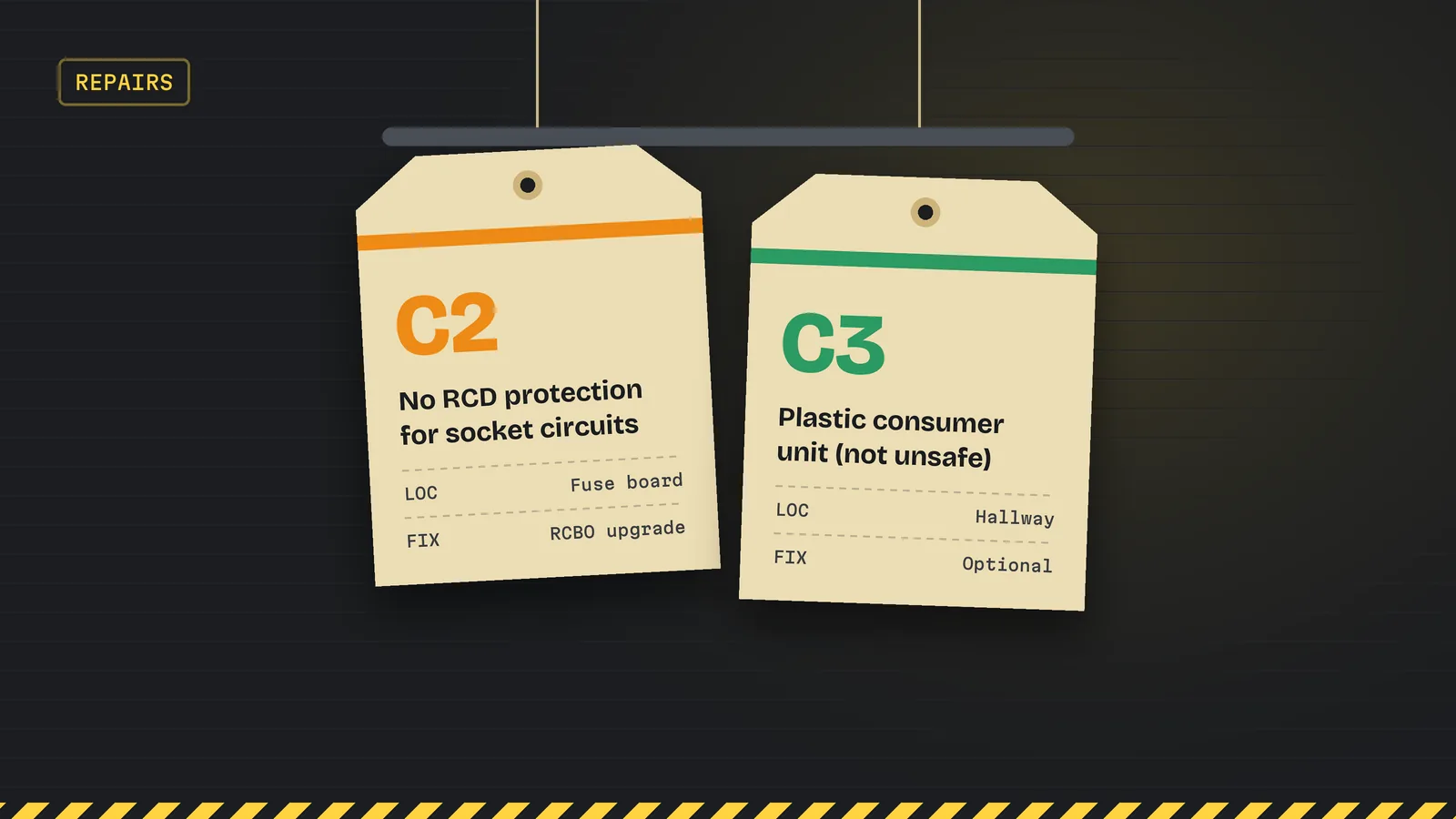
One of the most common C2 observations is missing RCD protection for socket outlets. It’s also one of the most often over-quoted: landlords and homeowners are regularly told they need a whole new consumer unit when a smaller fix would do.
What the C2 is really asking for
The wiring regulations require additional protection by a residual current device (RCD) on socket circuits and certain other circuits. The observation says that protection is missing, not that the board itself is faulty.
Option 1: fit RCBOs in the existing board
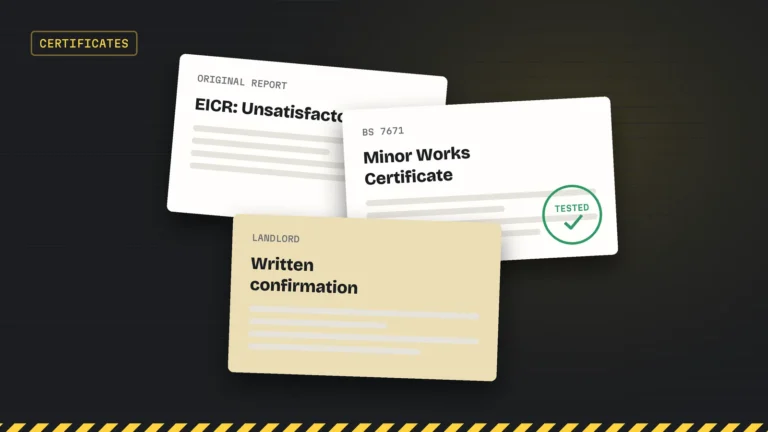
If the existing consumer unit is in good condition, has suitable spare capacity and accepts compatible devices, swapping the relevant circuit breakers for RCBOs can provide the missing protection. It’s usually quicker and cheaper, and it’s certified with a Minor Electrical Installation Works Certificate.
Option 2: replace the consumer unit
A replacement is the right answer when the board itself is the problem: it’s damaged, it’s a combustible board in an escape route, or it can’t take suitable protective devices. In England, replacing a consumer unit is notifiable under Part P, so it’s certified with an Electrical Installation Certificate and you receive a Building Regulations compliance certificate.
What about a plastic consumer unit marked C3?
An older plastic board in a suitable location is usually a C3: improvement recommended, not a failure. It doesn’t need replacing to make the report satisfactory, although upgrading it can make sense if other work is already planned.
When we quote for a C2, we explain the options and what each one costs, so you can see why a particular fix is recommended.