After remedial work, the paperwork matters as much as the repairs. It’s how you prove the installation is now safe to a tenant, a council, a buyer’s solicitor or an insurer.
Minor Electrical Installation Works Certificate (MEIWC)
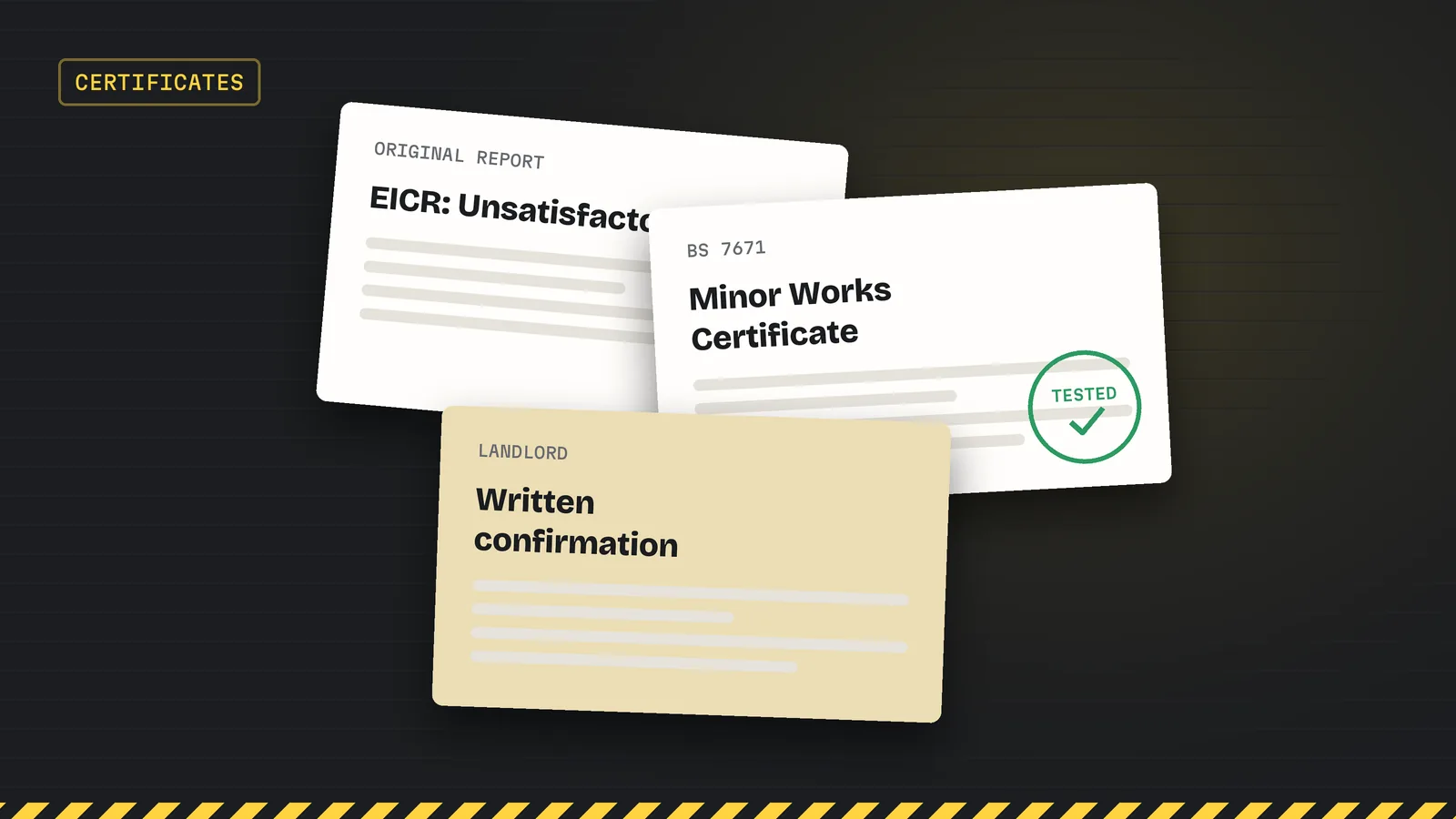
Most remedial repairs, such as replacing a damaged accessory, adding RCD protection with RCBOs or installing main bonding, are certified with a Minor Works Certificate. It records what was done and the test results for the circuit that was altered.
Electrical Installation Certificate (EIC)
New circuits and consumer unit replacements are certified with an EIC. Where the work is notifiable, such as a consumer unit replacement in England, a registered competent-person electrician notifies it for you and you receive a Building Regulations compliance certificate.
Written confirmation for landlords
Landlords also need written confirmation that the remedial work is complete and the installation now meets the required standard. Send it with a copy of the original EICR to the tenant and the local housing authority within 28 days of completion.
Do you need a new EICR?
Not usually. The individual certificates, together with the original report and the written confirmation, show that the installation is now satisfactory. The original report’s next inspection date still applies.
Keep everything together
- The original EICR
- A certificate for each repair (MEIWC or EIC)
- A Building Regulations compliance certificate for notifiable work
- Written confirmation of the completed remedial works
We hand over the full set when the work is finished, so nothing goes missing between the repair and the paperwork.